Show-quality minis, therapy prospects, driving horses, and family pets — browse listings with real photos, videos, and honest prices.
Browse Miniature Horses for Sale →Miniature horses aren't ponies. They're not baby horses that haven't grown yet. They're a fully developed breed — scaled-down horses that stand under 34 inches (AMHA) or 38 inches (AMHR) at the withers and pack more personality per inch than just about any animal you'll meet.
Minis are remarkably versatile. They drive in harness — singles, pairs, and teams. They compete in halter and conformation classes. They work as therapy and service animals (ADA-recognized). They're companion animals for other horses, 4-H projects for kids, and beloved family pets. Some people keep them in their backyards. A few even live in the house.
Whether you're looking for a show prospect, a driving horse, a therapy candidate, or just a good-natured animal that makes everyone who meets it smile, Mane Match helps you find the right miniature horse from real sellers with upfront pricing.
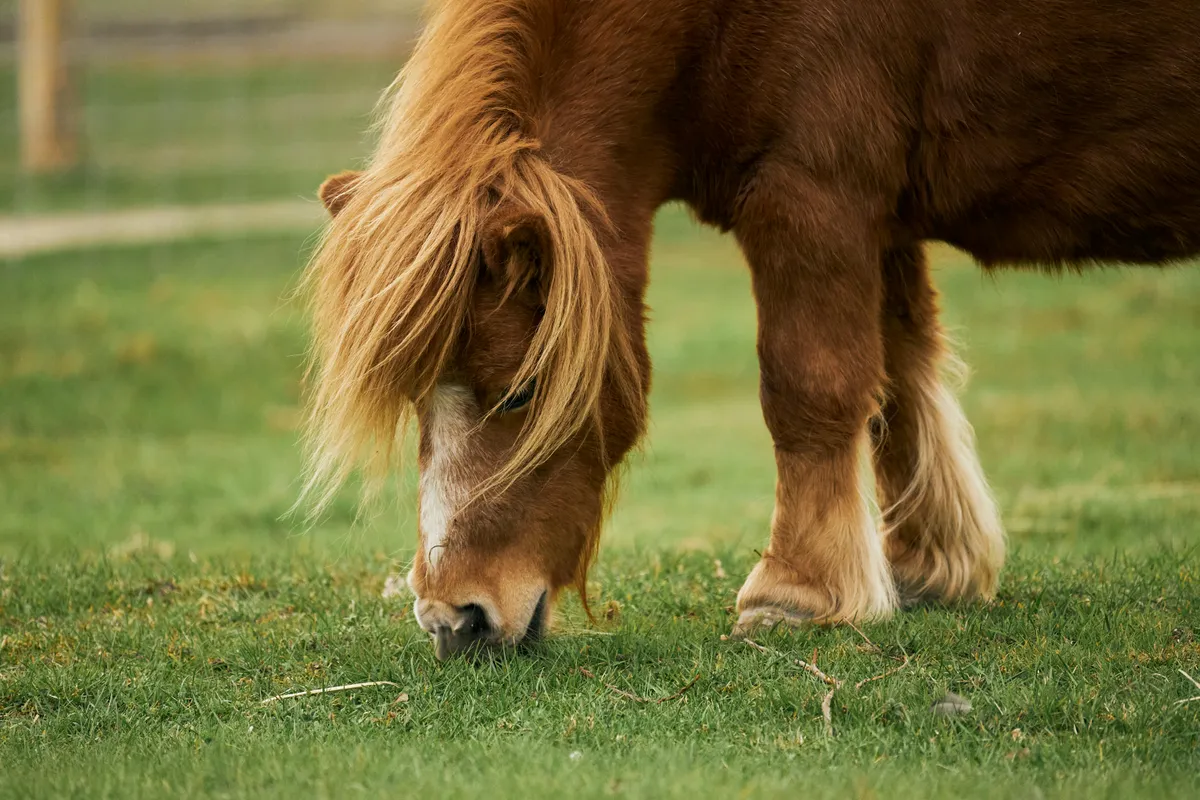
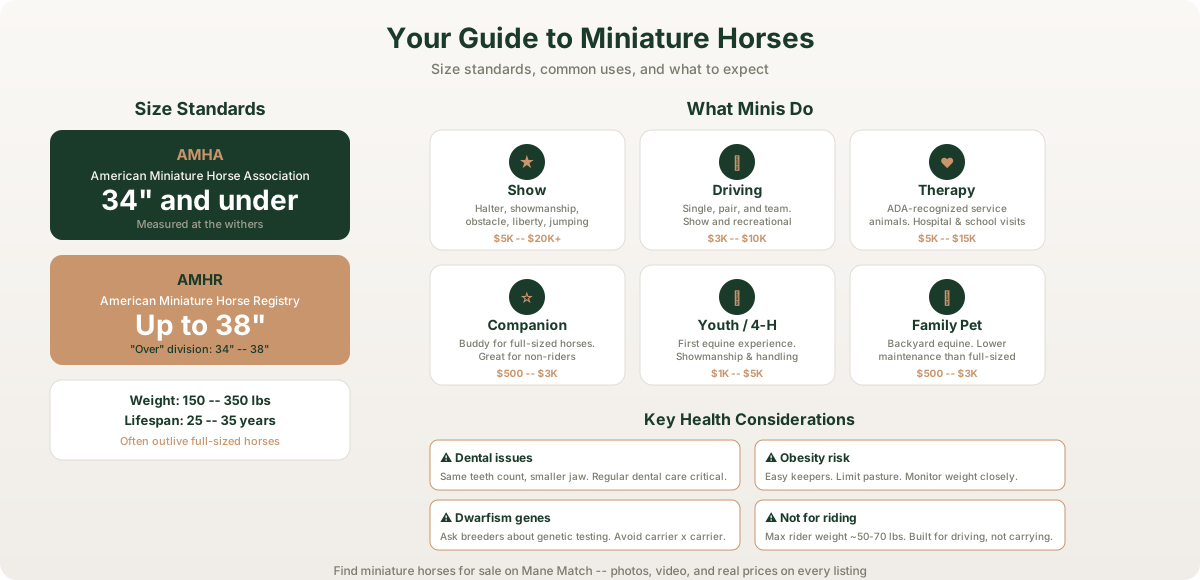
Size standards. The two main registries have different height limits. AMHA (American Miniature Horse Association) requires horses to measure 34 inches or under at the last hairs of the mane. AMHR (American Miniature Horse Registry) allows up to 38 inches and divides into two divisions — under 34 inches and 34 to 38 inches. Most minis weigh between 150 and 350 pounds.
Lifespan. Miniature horses commonly live 25 to 35 years — often longer than their full-sized counterparts. With proper care, many minis live well into their 30s, which means buying a mini is a long-term commitment.
Intelligence. Minis are exceptionally smart. They learn quickly, remember what they've been taught, and figure out gates, latches, and feed bins faster than you'd expect. That intelligence is a double-edged sword — a bored mini is a mischievous mini. They need mental stimulation and consistent handling.
Temperament. Well-bred, well-handled miniature horses tend to be calm, curious, and people-oriented. They bond closely with their owners and generally enjoy human interaction. But don't let their size fool you — they're still horses. A mini that hasn't been properly trained can kick, bite, rear, and drag you around just like a bigger horse. Respect the animal and train it like any other horse.
Halter and conformation showing. Miniature horse shows are a thriving competitive circuit. Horses are judged on conformation — they should look like a perfectly proportioned, scaled-down horse, not a dwarf or a chunky pony. AMHA and AMHR both hold national championships with serious competition.
Driving. This is where minis really shine. Miniature horses are natural driving animals — in harness pulling a cart, buggy, or wagon. You'll see them in pleasure driving, obstacle driving, and combined driving events. Many mini owners say driving is the most fun you can have with a small horse.
Therapy and service work. Miniature horses are recognized by the ADA as a legitimate service animal alternative to dogs. They serve as guide animals for the visually impaired and as therapy animals in hospitals, nursing homes, and schools. Their calm temperament, long lifespan, and hypoallergenic coat make them well-suited for this work.
Companion animals. Many full-sized horse owners keep a mini as a companion for a horse that lives alone or needs a pasture buddy. Minis are also used as companions for retired horses, horses on stall rest, or horses that get anxious without a herd.
Youth and 4-H. Miniature horses are a popular 4-H and youth project. Kids can learn grooming, showmanship, driving, and basic horsemanship on an animal they can manage physically. It's an excellent introduction to the equine world.
Family pets. Let's be honest — a lot of people buy minis simply because they love them. A well-trained miniature horse on a small acreage makes a wonderful pet. They're social, interactive, and endlessly entertaining.
Browse miniature horse listings with real photos, videos, and upfront pricing.
Find Your Next Mini — Start Browsing →Check the teeth. Dental issues are one of the most common health problems in miniature horses. Their small jaws can lead to overcrowding, retained caps, and misalignment. Ask for dental records and have a vet check the teeth before you buy. Ongoing dental care every 6 to 12 months is non-negotiable with minis.
Evaluate conformation. A well-conformed miniature horse should look like a scaled-down version of a full-sized horse — balanced, proportional, with clean legs and a refined head. Avoid minis that look like chunky ponies with short, thick necks and stubby legs. Good conformation isn't just about looks — it affects soundness and longevity.
Ask about dwarfism. Dwarfism is a genetic condition that occurs in miniature horses. Dwarf minis have disproportionate bodies — oversized heads, short legs, bulging foreheads, and underbites. The condition causes lifelong health problems. Responsible breeders test for dwarfism genes. Ask the seller directly and look at the horse's parents if possible.
Watch it move. Ask to see the horse walk and trot on a lead, on hard ground if possible. Look for even, fluid movement. Minis can have soundness issues just like big horses — stiffness, short stride, or head-bobbing can signal lameness.
Assess weight. Obesity is epidemic in miniature horses. They're easy keepers that gain weight on almost nothing, and excess weight leads to founder, laminitis, and metabolic syndrome. A healthy mini should have visible ribs you can feel easily. If the horse you're looking at is round as a barrel, factor in the management challenge.
Verify registration. If the seller claims the horse is registered AMHA or AMHR, ask for papers. Registration adds value and confirms the horse's breeding. If you're buying for show or breeding, registration is essential. For a pet or companion, it matters less — but it's still worth knowing what you're getting.
Miniature horse prices vary widely depending on breeding, training, conformation, and intended use:
Pet / companion: $500 to $3,000. Unregistered or grade minis with basic handling. Good for pasture companions and family pets.
Registered with training: $2,000 to $7,000. AMHA or AMHR registered, halter broke, leads and loads well, may have some show or driving experience.
Show quality: $5,000 to $20,000+. Top conformation, strong pedigrees, proven in the show ring or sired by champions. National-level competitors can go much higher.
Driving trained: $3,000 to $10,000. Finished driving horses with harness training, road-safe, experienced in cart or wagon. A well-broke driving mini is worth the investment.
Therapy / service: $5,000 to $15,000. Specifically trained and temperament-tested for therapy or service work. These horses have been through desensitization programs and public access training.
If you've ever tried to buy a miniature horse on Facebook groups or Craigslist, you know the drill. Blurry photos taken from 50 feet away. "DM for price." Posts buried under 200 comments saying "interested!" No way to filter, no way to compare, no way to know if the seller is legitimate.
Mane Match is built for this. Every listing has clear photos and videos. Prices are shown upfront — no games. You can filter by breed, price, age, training level, and location. You can message sellers directly through the platform. Verified sellers earn a badge so you know who you're dealing with.
Whether you're looking for your first mini or adding to a herd, Mane Match gives you a clean, modern way to find miniature horses for sale from real sellers who are serious about placing their horses well.
Pet and companion miniature horses typically cost $500 to $3,000. Registered minis with training run $2,000 to $7,000. Show-quality miniature horses can cost $5,000 to $20,000 or more. Driving-trained minis range from $3,000 to $10,000.
AMHA (American Miniature Horse Association) miniature horses measure 34 inches or under at the withers. AMHR (American Miniature Horse Registry) minis can be up to 38 inches. Most miniature horses weigh between 150 and 350 pounds.
Not by adults. Only very small children weighing 50 to 70 pounds should ride a miniature horse, and only for short, supervised walks. Miniature horses are bred for driving, halter showing, therapy work, and companionship — not riding.
Miniature horses commonly live 25 to 35 years, often longer than full-sized horses. With proper care, dental maintenance, and weight management, many minis live well into their 30s.
Well-trained miniature horses are excellent with children. Their small size makes them less intimidating, and they tend to be gentle when properly socialized. Supervision is still needed — minis are still horses and can kick or bite if startled or mishandled.
Miniature horses eat grass hay (not alfalfa, which is too rich), a small amount of grain or ration balancer if needed, fresh water, and a mineral block. The biggest dietary challenge with minis is preventing obesity — they gain weight very easily and are prone to founder and laminitis.
Yes. Miniature horses are herd animals and need at least one companion — another mini, a full-sized horse, a goat, or a donkey. Single miniature horses often develop anxiety, depression, and behavioral issues like cribbing or weaving.
No active listings right now. Check back soon.
List it free and reach serious buyers who are actively searching for their next mini.
Selling a Miniature Horse? List It Free and Reach Serious Buyers →