Browse local listings from Michigan sellers. Quarter horses, trail horses, barrel racers, and more — with real photos, real videos, and real prices.
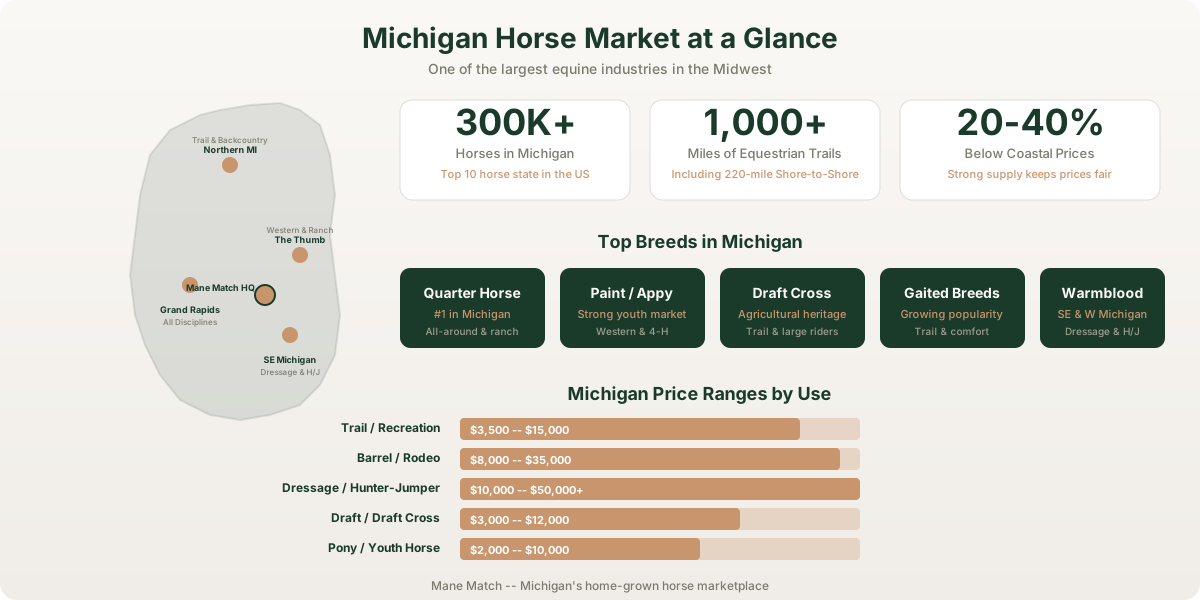
Browse Michigan Horses for Sale →Michigan is home to more than 300,000 horses — one of the largest horse populations in the Midwest. From the western shoreline along Lake Michigan to the rolling farmland of the Thumb to the wide-open spaces of northern Michigan, horses are part of the landscape here.
The state's diverse geography supports every discipline. Western riders work cattle ranches in the southern counties. Trail riders explore hundreds of miles of state and national forest. English riders compete at dressage and hunter/jumper facilities throughout the metro areas. Draft breeds pull at county fairs across the state every summer.
Whether you're looking for a ranch-broke quarter horse, a seasoned trail partner, or a competitive show prospect, Michigan's horse market has depth. The community is active, the breeders are established, and the infrastructure — barns, vets, farriers, trainers — is solid.
See the horse in person. Buying locally means you can visit before you commit. Watch the horse be caught, groomed, tacked, and ridden. Ride it yourself. See how it loads, how it handles distractions, and how it acts when it's not being shown off. None of that happens over a video call.
Know the seller. Michigan's equestrian community is connected. Trainers know trainers, barns talk to barns, and reputations travel. When you buy from a Michigan seller, you can check references, visit their facility, and get a sense of how the horse has actually been kept and handled.
Shipping is simpler. Buying in-state means no interstate health certificates, no multi-day hauling, and no quarantine periods. Pick the horse up yourself or hire a local hauler for a fraction of what a cross-country transport would cost.
Michigan horses are adapted to Michigan weather. A horse raised in Michigan already knows what a Michigan winter feels like — the mud, the cold, the indoor-arena months. It's been on frozen ground, handled snow, and dealt with flies in July. You're not acclimating a horse from a completely different climate.
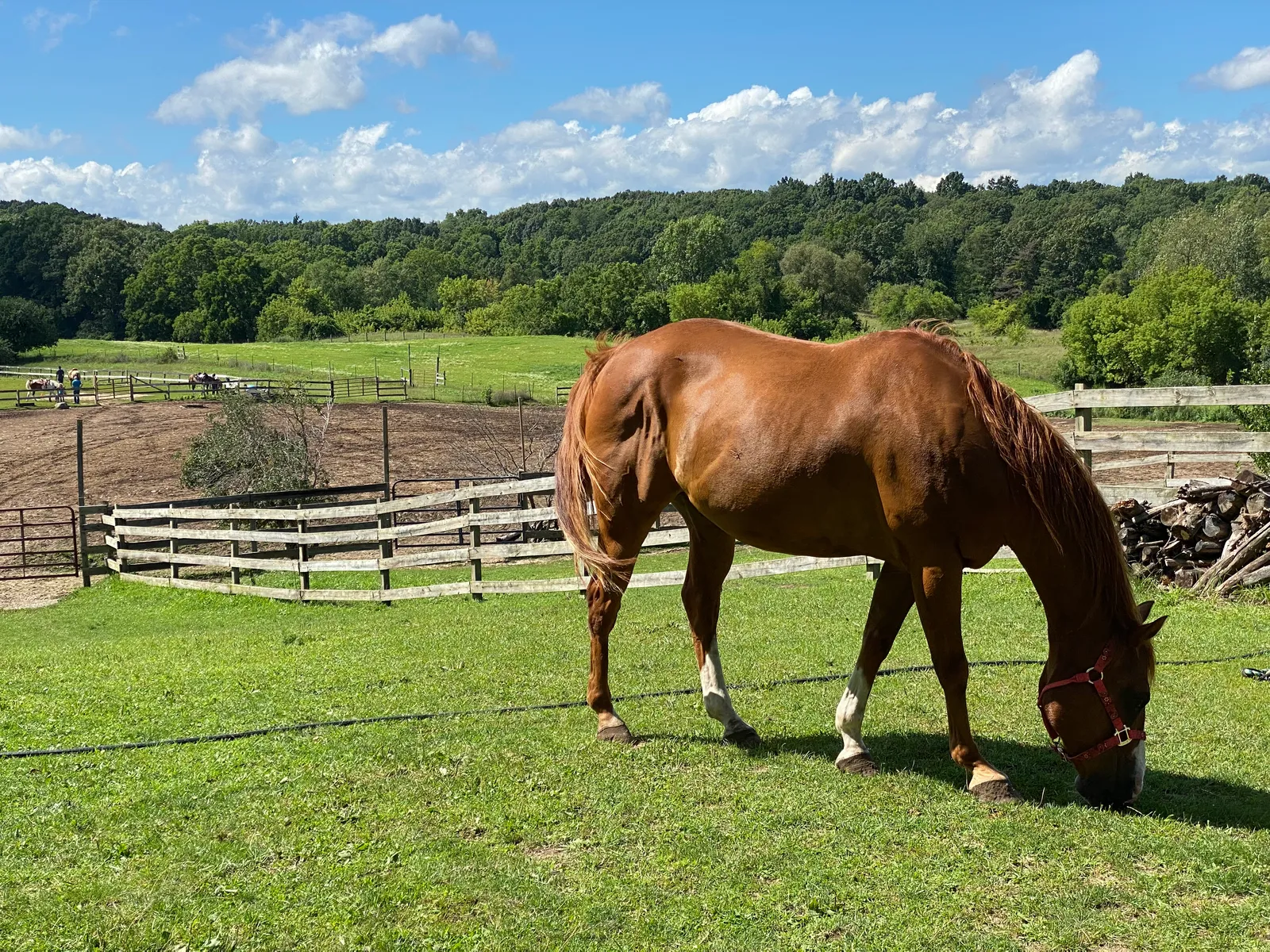 Michigan horses — born and raised for the conditions you'll ride in.
Quarter horses are Michigan's most popular breed by a wide margin. Versatile, hardy, and available at every price point — from ranch-broke trail horses to competitive reining and cutting prospects. If you're not sure where to start, start here.
Paints and appaloosas share a lot of quarter horse genetics and are well-represented across the state. Flashy color, solid temperaments, and a strong showing and trail community in Michigan.
Draft breeds have deep roots in Michigan. Percherons, Belgians, and Clydesdales — and their crosses — are common, especially in rural areas. Michigan's county fair circuit and pulling competitions keep the draft community active and thriving.
Arabians are popular with endurance riders and trail enthusiasts. Michigan's extensive trail systems are a natural fit for the breed's stamina and surefootedness. The state has several established Arabian breeding farms.
Warmbloods — Hanoverians, Oldenburgs, Dutch Warmbloods — are found throughout Michigan's English riding community. The state's dressage and hunter/jumper circuits are competitive, and quality warmbloods are available from local breeders and resale barns.
Gaited breeds like Tennessee Walkers and Missouri Fox Trotters have a loyal following in Michigan, especially among trail riders who value smooth gaits over long distances.
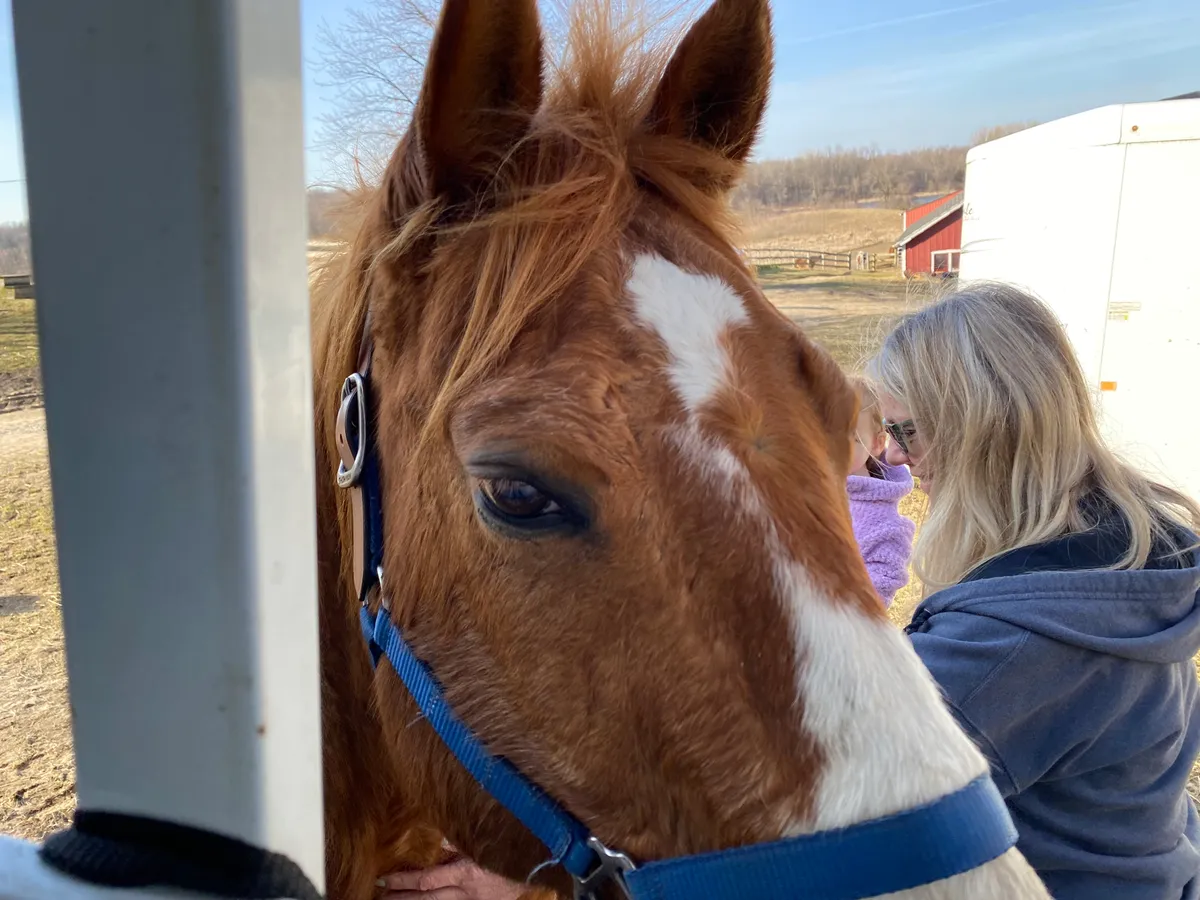 Michigan produces quality horses across every breed.
Start browsing Michigan listings with photos, videos, and real prices.
Find a Horse Near You — Start Browsing Michigan Listings →Michigan's trail systems are some of the best in the Midwest — and they're a big part of why so many people keep horses here.
Shore-to-Shore Trail. Michigan's crown jewel for equestrians. This 220-mile trail crosses the entire Lower Peninsula from Lake Michigan to Lake Huron, passing through state forests, farmland, and small towns. Riders can tackle sections or plan multi-day trips with designated horse camps along the route.
Huron and Manistee National Forests. Combined, these forests cover over a million acres in the northern Lower Peninsula. Miles of equestrian-designated trails through hardwoods, pines, and river valleys. Some of the most scenic riding in the state.
State recreation areas. Waterloo, Pinckney, Yankee Springs, Highland, and Proud Lake all have well-maintained equestrian trail systems. These are closer to population centers and offer day-ride options without a long haul. Most have staging areas with trailer parking.
The Thumb region. Michigan's Thumb is flat, agricultural, and full of quiet back roads and trails. Popular with riders who like open spaces and easy terrain. Less crowded than the more popular state forests.
Northern Michigan. From Traverse City north to Mackinaw, the riding is expansive. State forests, private trails, and organized group rides make this a destination for Michigan equestrians, especially in summer and fall.
Michigan's horse market is more affordable than the coasts but competitive enough that quality horses hold their value. Here's what you'll typically see:
Trail horses: $3,500 to $15,000. A well-broke, experienced trail horse in the $5,000 to $10,000 range is the sweet spot for most buyers.
Barrel and rodeo horses: $8,000 to $35,000. Proven competitors with race records command the upper end. Prospects and younger horses start lower.
Dressage and jumpers: $10,000 to $50,000+. Imported warmbloods and upper-level show horses push well past $50,000. Solid schoolmaster types for adult amateurs tend to land in the $15,000 to $30,000 range.
Draft breeds: $3,000 to $12,000. Riding drafts and draft crosses are popular and reasonably priced. Matched pulling teams and registered breeding stock can go higher.
Ponies and youth horses: $2,000 to $10,000. Safe, kid-broke ponies and small horses are always in demand. A genuinely bombproof youth horse with show miles will be at the top of that range or above.
Location filtering. Search by state, region, or distance from your zip code. Find horses near you without scrolling through listings from across the country.
Swipe interface. Browse listings the way you browse everything else — swipe right to save, left to pass. It's fast, and it works on your phone.
Photos and video first. Every listing leads with media. See the horse move, see it under saddle, see it on the ground — before you ever message the seller.
Real-time messaging. Message sellers directly through the platform. No phone tag, no email chains, no waiting for a Craigslist reply that never comes.
Based in Michigan. Mane Match is built in Grand Blanc, Michigan. We know this market because we're in it.
Trail horses typically cost $3,500 to $15,000, barrel horses $8,000 to $35,000, dressage and jumpers $10,000 to $50,000+, draft breeds $3,000 to $12,000, and ponies or youth horses $2,000 to $10,000. Michigan prices are moderate compared to the coasts.
Quarter horses are the most popular breed in Michigan by a wide margin. They're versatile, hardy, and well-suited to both western and English disciplines.
Michigan has exceptional riding. The Shore-to-Shore Trail spans 220 miles across the state. The Huron and Manistee National Forests offer extensive trail systems. State recreation areas like Waterloo, Pinckney, Yankee Springs, Highland, and Proud Lake all have equestrian trails. The Thumb region and northern Michigan are also popular riding areas.
No, Michigan does not require a license to own a horse. However, you do need a current negative Coggins test to transport your horse to public events, shows, or trail systems. Check your local township zoning ordinances for any restrictions on keeping horses on your property.
Visit the horse in person, check soundness with a pre-purchase exam from your own vet, verify registration papers if applicable, and ask about the horse's experience with Michigan-specific conditions — cold weather turnout, indoor arena work during winter, and footing on varied terrain.
Late fall and winter (October through February) generally offer the best prices. Sellers are looking to reduce herd sizes before winter feeding costs hit. Spring and summer bring higher demand and higher prices as riding season picks up.
No active listings right now. Check back soon.
List it free and reach local buyers who are actively searching for horses in Michigan.
Selling a Horse in Michigan? List It Free and Reach Local Buyers →