Dressage is a conversation. Every half-halt, every transition, every moment of collection is a question asked and answered between horse and rider. The sport rewards harmony — two bodies moving as one, power channeled through softness, precision disguised as ease.
That's why finding the right dressage horse matters more than almost any other buying decision in the equestrian world. This isn't just about gaits and scores. It's about finding the horse whose rhythm matches yours, whose temperament complements your riding style, and whose talent matches your ambition. The right combination elevates everything. The wrong one turns every ride into a negotiation.
Whether you're a competitor chasing centerline scores or a passionate amateur who lives for that perfect moment of connection in the sandbox, this guide will help you understand what to look for, what to expect, and how to find a dressage horse that moves with you — not against you.
Dressage judges score three gaits, and each one tells you something specific about a horse's suitability for the sport.
The walk must be a pure four-beat gait with good overtrack — the hind feet stepping well past the prints of the front feet. A walk that's lateral (pacing) or restricted is extremely difficult to improve with training. Of the three gaits, the walk is the hardest to change, so buy the best walk you can find.
The trot is where dressage horses show their suspension — that moment of airtime when all four feet leave the ground. You want elasticity, natural cadence, and a horse that pushes from behind rather than pulling from the front. The trot is the most trainable gait, but a horse with natural suspension will always have an advantage.
The canter should be uphill and three-beat with a clear moment of suspension. An uphill canter — where the horse's shoulders feel higher than its haunches — is essential for collection work at the upper levels. A downhill canter that falls on the forehand will limit how far you can go.
Trainability separates a talented horse from a useful one. The best dressage horses are intelligent, willing to try, and responsive to subtle aids without being reactive. They accept the contact, think forward, and don't shut down under pressure. A horse with average gaits and exceptional trainability will outperform a talented horse that fights the program.
Conformation supports the job. An uphill build, well-set neck, strong hindquarters, and correct leg alignment all make the work easier for the horse. Conformation flaws don't necessarily disqualify a horse, but they can make certain movements harder and increase the risk of soundness issues over time.
Temperament is the foundation. Dressage asks a horse to be simultaneously powerful and obedient, forward and contained. That requires a horse with a good brain — one that can handle the mental demands of repetitive schooling without becoming sour, anxious, or checked out.
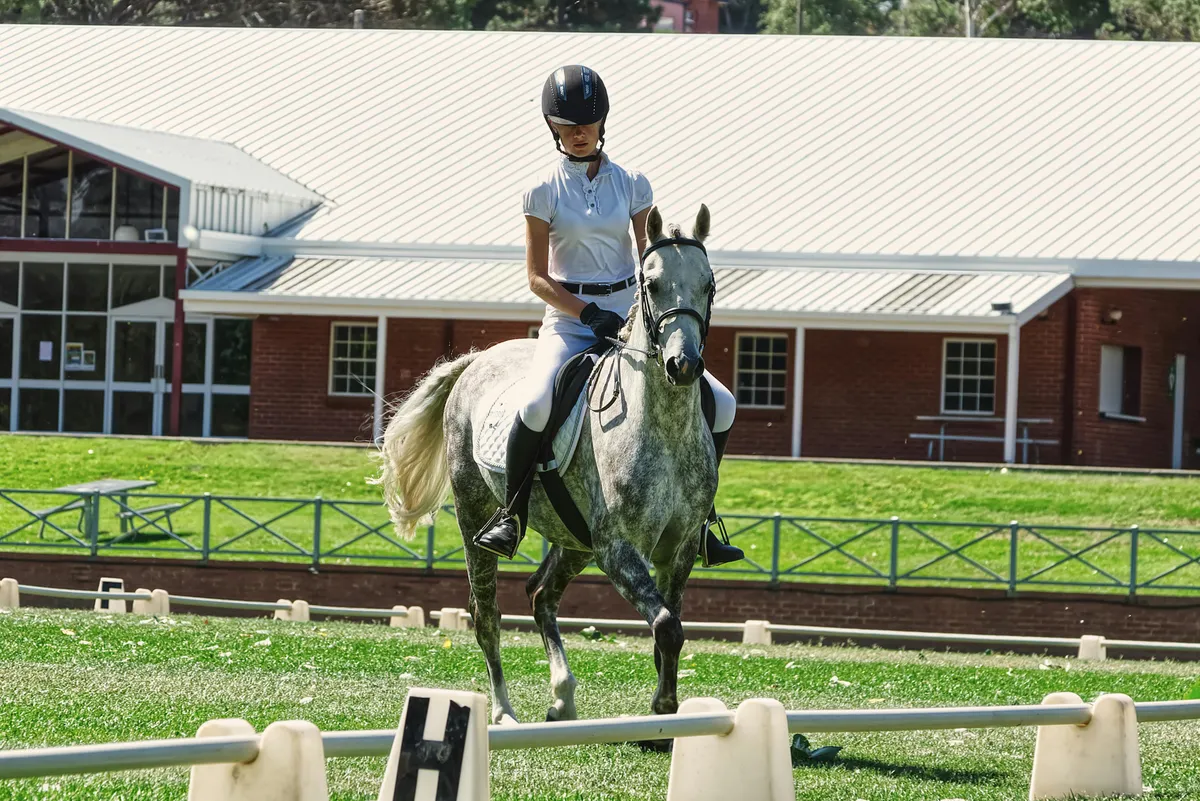
Certain breeds dominate dressage arenas for good reason — generations of selective breeding have produced horses built for the job.
Warmbloods are the backbone of modern dressage. The Dutch Warmblood (KWPN) has produced more Olympic and World Championship dressage horses than any other studbook. Hanoverians are known for their rideability and strong gaits. Oldenburgs tend toward power and expression. Danish Warmbloods and Westphalians round out the top European studbooks. If you're buying a warmblood for dressage, you're buying into a breeding program specifically designed for this sport.
Thoroughbreds and OTTBs are the accessible alternative. A well-chosen off-the-track Thoroughbred with the right temperament can be an outstanding dressage partner — lighter in the hand, naturally forward, and often more affordable than a warmblood of similar talent. They require patient retraining, but the best ones compete successfully through the upper levels. The USDF awards specific recognition for Thoroughbreds in dressage.
Lusitanos, Andalusians, and PREs are masters of collection. Where warmbloods excel at the big, elastic extended gaits, Iberian breeds shine in piaffe, passage, and pirouettes. Their natural balance and willingness to sit make collected work feel easy. They're increasingly competitive at FEI levels and are unmatched for the rider who values the feeling of a horse that truly sits and carries.
Friesians turn heads with their dramatic presence, flowing manes, and expressive movement. While they face structural challenges at the highest levels — some lack the suspension for top extended work — a quality Friesian or Friesian cross can be a compelling dressage horse through the mid-levels, and few breeds match their showmanship in a dressage court.
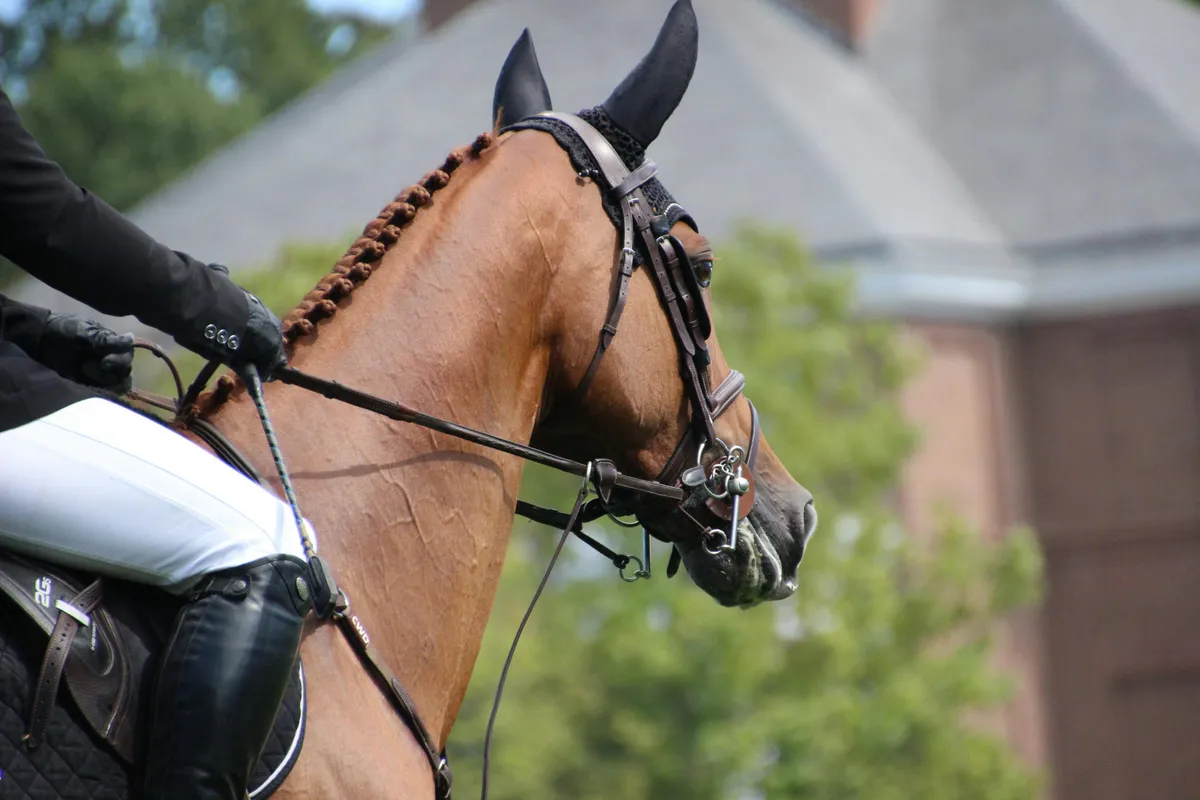
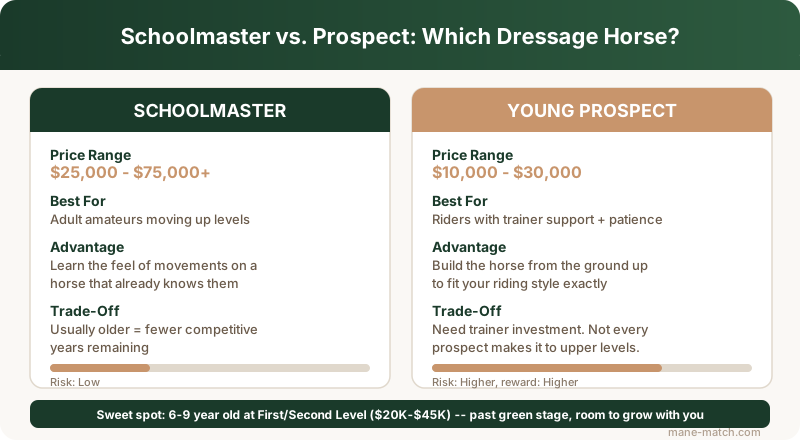
The dressage horse market breaks down into three broad categories, and understanding where you fit saves time, money, and frustration.
Schoolmasters ($25,000 to $75,000+) are horses trained well above your current level. They already know the movements — your job is to learn how to ask. A good schoolmaster is typically in its teens, has a competition record, and has packed riders through the levels before. They're the most expensive option per ride, but the education they provide is irreplaceable. For an amateur rider serious about moving up, a schoolmaster is the fastest path. The trade-off is age: you're buying experience, not years of competition ahead.
Young prospects ($10,000 to $30,000) are the long game. A well-bred 3- to 5-year-old with correct gaits and a good brain is a blank canvas. The upside is enormous — you get to develop the horse from the beginning and build a partnership from scratch. The downside is that you need a trainer, patience, and the skill (or the support) to develop a green horse correctly. Green plus green still equals black and blue, even in dressage.
Horses in training ($20,000 to $45,000) are the sweet spot for many buyers. A 6- to 9-year-old that's already schooling Second or Third Level gives you a horse with a foundation but still with room to grow. You skip the baby years, get a horse that's rideable and confirmed in the basics, and still have years of partnership ahead. For a competent amateur, this is often the best value in the dressage market.
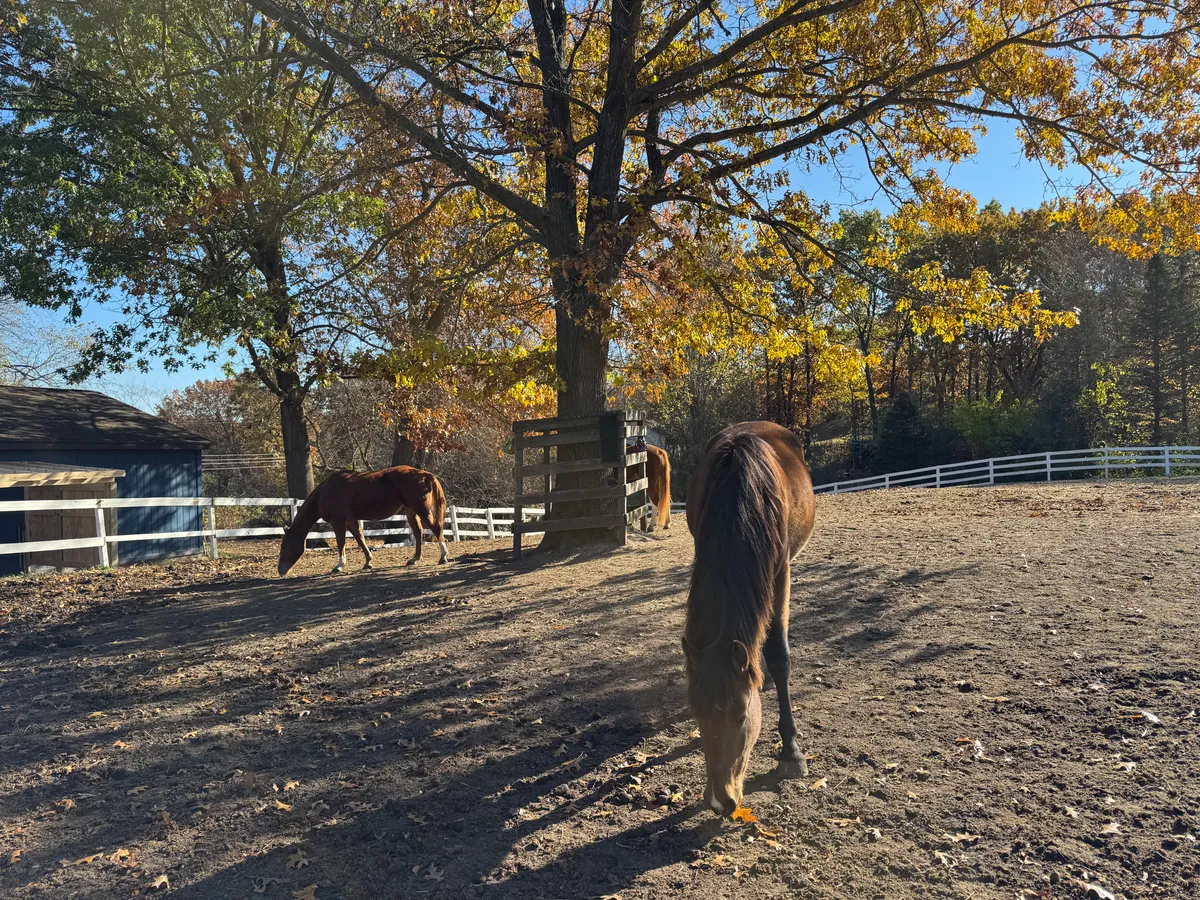 Finding the right partner is everything in dressage.
Browse dressage horses from real sellers with videos, training history, and competition records.
Find Your Next Dressage Partner — Start Swiping →The search process for a dressage horse is more nuanced than most other disciplines. Here's how to evaluate what you're seeing.
Watch video first. Before you drive three hours to try a horse, ask for video — and not just the highlight reel. You want to see all three gaits in both directions, transitions within and between gaits, and ideally some lateral work if the horse is at that level. Video reveals a lot about rhythm, balance, and willingness. If a seller won't send current video, ask yourself why.
Ride it yourself — with your trainer. Bring your trainer to every serious trial ride. Watch the seller ride first, then get on yourself. Your trainer can see things from the ground that you can't feel from the saddle yet — crookedness, tension patterns, resistance that a skilled rider can mask. Trust what your trainer tells you, even when the horse feels amazing. Especially when the horse feels amazing.
Vet check with performance in mind. A standard pre-purchase exam evaluates basic soundness, but dressage horses need more scrutiny. Ask your vet about hock and stifle health (critical for collection), back and neck flexibility, and any signs of kissing spines. X-rays of the feet, hocks, and stifles are standard for horses at this price point. If the horse is older, bloodwork and a cardiac check are worth the extra cost.
Understand the training timeline. Be honest about where the horse is versus where you want to go. A horse schooling First Level reliably needs 1 to 2 years of correct training to confirm Third Level. Jumping from Training Level to Prix St. Georges is a 4- to 6-year project with a talented horse and consistent professional help. Buy the horse that fits your timeline, not your fantasy.
Evaluate temperament honestly. Ask to see the horse brought in from the field, groomed, and tacked without being lunged first. A horse that needs 20 minutes on the lunge line before it's rideable is telling you something. Dressage requires daily concentrated work — you need a horse you can get on, ride productively, and put away without a production every time.
Shopping for a dressage horse is overwhelming. Between Facebook groups, breeder websites, and word-of-mouth leads, it's easy to spend weeks scrolling through listings that don't match what you need.
Mane Match simplifies the search. Filter by breed, discipline, training level, price range, and location. Every listing includes photos, videos, and detailed training information — so you can evaluate horses before making the drive. Message sellers directly through the platform when you find something worth pursuing.
Whether you're looking for a schoolmaster to teach you the feel of half-pass, a young warmblood prospect with international bloodlines, or a solid horse in training to bring up through the levels together, the search starts here.
Prospects typically cost $10,000 to $30,000, horses in training $20,000 to $45,000, and schoolmasters $25,000 to $75,000 or more. Imported European horses with FEI records can exceed $100,000.
Warmbloods are the dominant breed in dressage — KWPN, Hanoverian, and Oldenburg are the most common at upper levels. Thoroughbreds and OTTBs are a more affordable alternative and can be very competitive. Lusitanos and Andalusians excel at collection work.
A schoolmaster is a horse trained well above your current level that can teach you the feel of more advanced movements. They're ideal for amateur riders moving up the levels. The trade-off is age — most schoolmasters are in their teens — but the education they provide is invaluable.
Look for a pure four-beat walk with good overtrack, a trot with natural suspension and elasticity, and an uphill three-beat canter with a clear moment of suspension. The horse should move through its back and be willing to stretch forward and down into the contact.
Yes — many OTTBs make excellent dressage horses. Look for one with a calm temperament, good natural rhythm, and a willingness to retrain. They're typically more affordable than warmbloods and can be competitive through the upper levels.
A good rule of thumb is to buy a horse trained at least one level above where you currently ride. This gives you room to learn without outgrowing the horse too quickly. Work with your trainer to evaluate horses at the right level for your goals.
No active listings right now. Check back soon.
List it free and reach serious dressage riders actively searching for their next partner.
Selling a Dressage Horse? List It Free and Reach Serious Riders →