Everything first-time buyers need to know, from choosing the right breed to closing the deal.
Browse Beginner-Friendly Horses for Sale →Maybe you've been taking lessons. Maybe you have been dreaming about it for years. Maybe you just know it's time. Knowing how to buy a horse, what to look for, what to avoid, and what it actually costs, is the difference between a great experience and an expensive mistake.
This guide covers what every first-time buyer should know: finding beginner horses for sale, understanding what "broke" actually means, and knowing when to walk away from a deal that doesn't feel right.
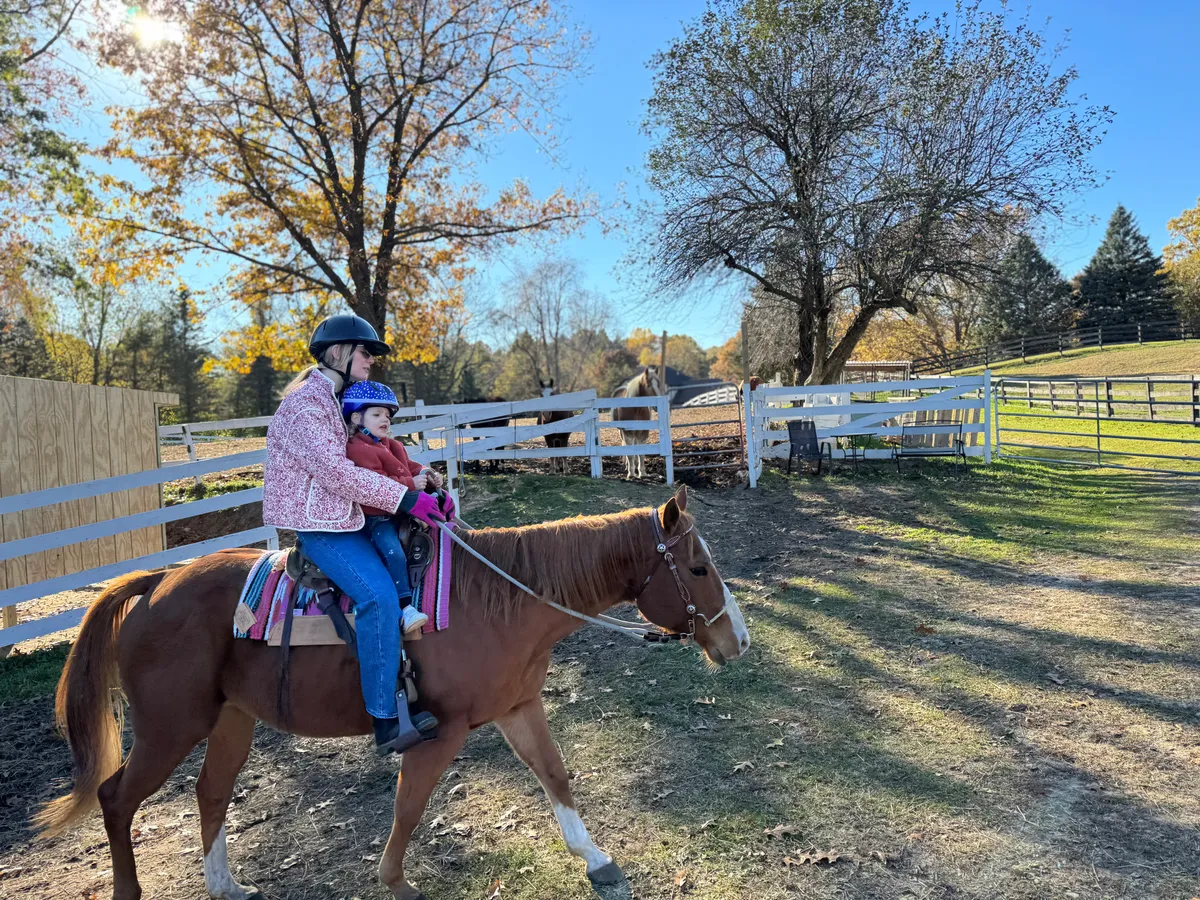
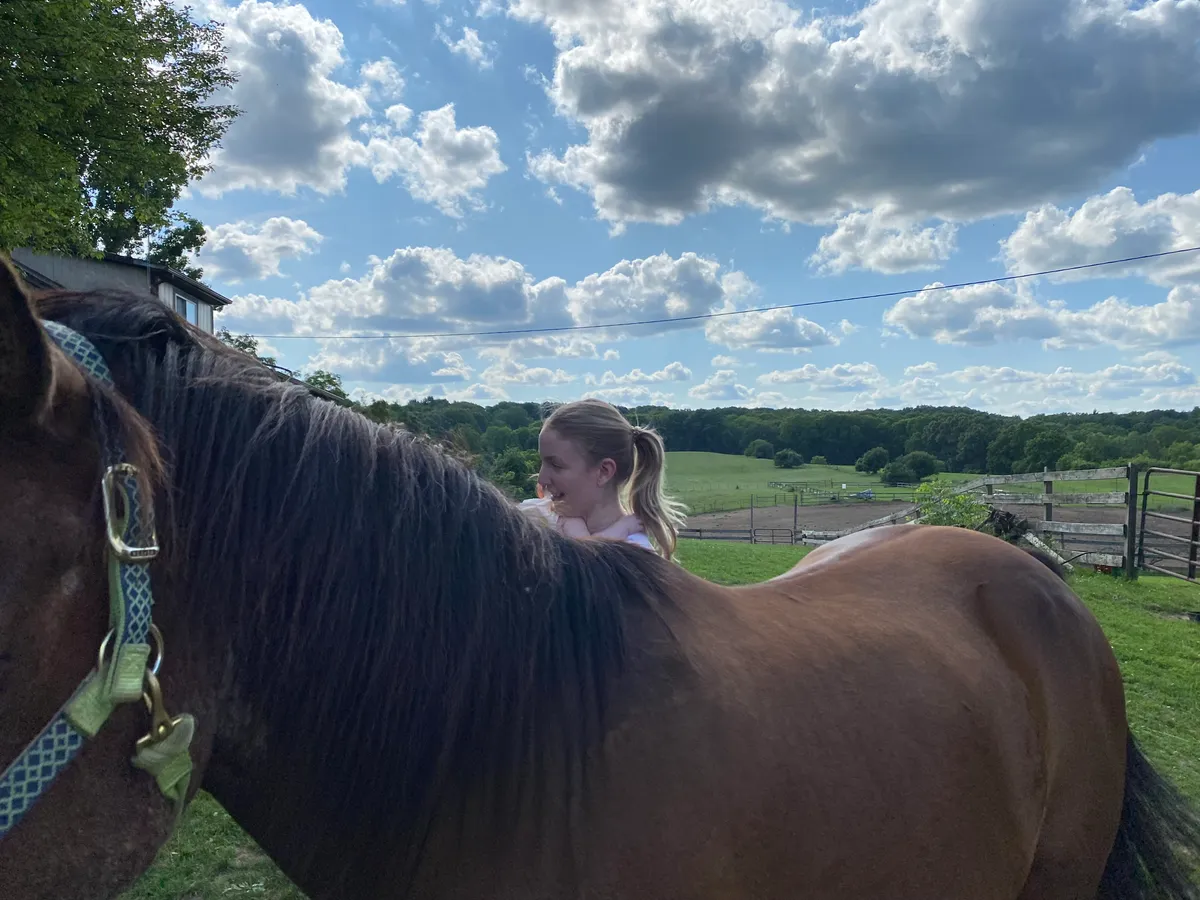 The bond between horse and rider starts before the first ride.
The right first horse depends on what you actually plan to do with it. Use this as a quick starting point.
Show / 4-H circuit and sport / arena work landing pages are coming soon. For now, browse all horses for sale and filter by discipline.
Not every horse is a good first horse. That doesn't mean they're bad horses; it just means some horses need more rider experience than others. When you're shopping for horses for beginners, here's what actually matters:
Temperament over everything. A beginner horse should be calm, patient, and forgiving. You want a horse that doesn't overreact when you accidentally kick it in the side, pull too hard on the reins, or lose your balance. The term you'll hear is "bombproof" or "dead broke," meaning this horse has seen it all and doesn't spook at much.
Age and experience. For a first horse, you generally want something between 8 and 18 years old. A horse in that range has been around long enough to know its job and isn't going to test you the way a younger, greener horse will. The old horseman's saying is true: green plus green equals black and blue. A beginner rider needs a seasoned horse.
Training level. "Well broke" for a beginner means the horse walks, trots, and canters on cue without a fight. It stands for grooming, picks up its feet, loads on a trailer, and doesn't pull on cross-ties. It doesn't bolt, buck, rear, or barn-sour to the point of being unsafe. Ask the seller exactly what the horse has been doing and how often it's been ridden.
Size. For adult beginners, a horse between 14.2 and 16 hands is usually a comfortable range. A shorter, lighter-built horse can suit a smaller adult rider. The right fit matters because confidence comes from feeling secure in the saddle.
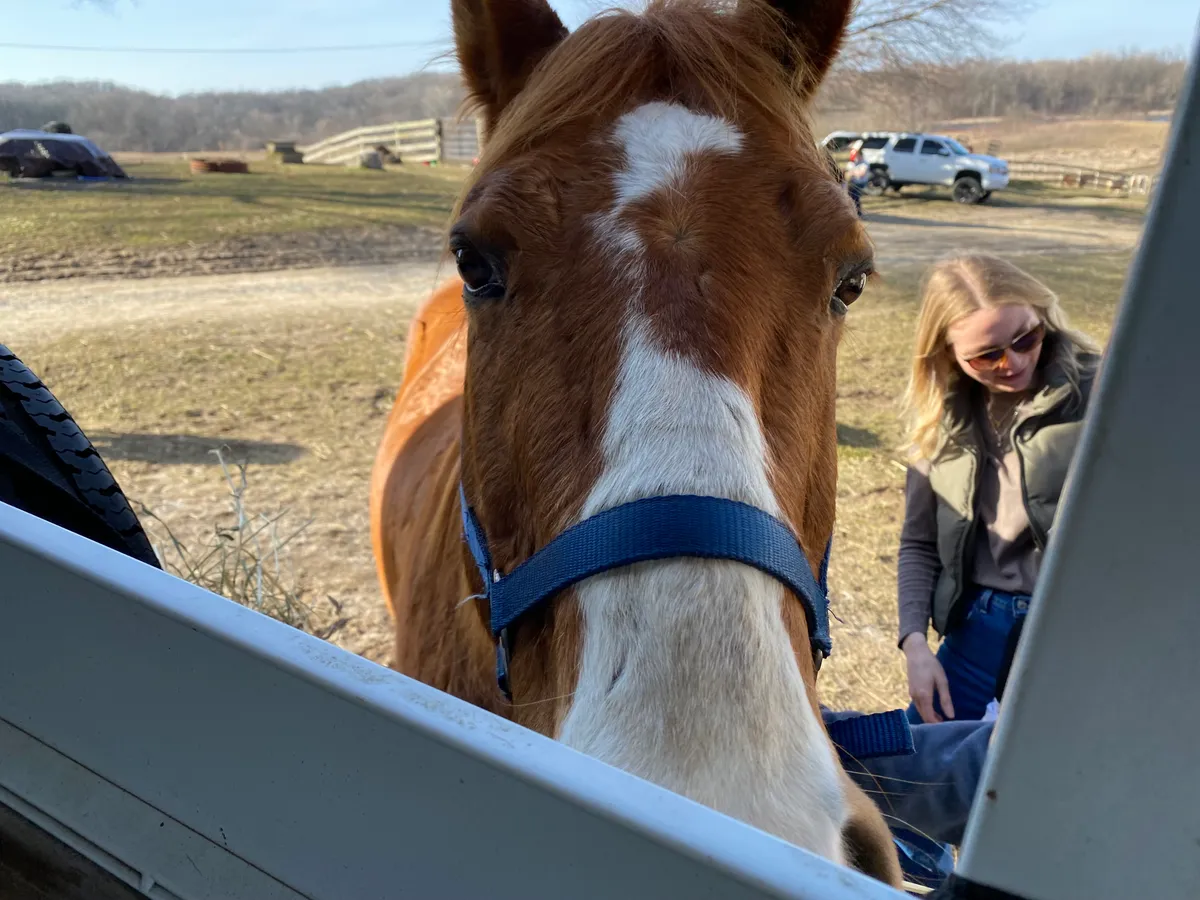 A calm, curious temperament like this is what you're looking for in a first horse.
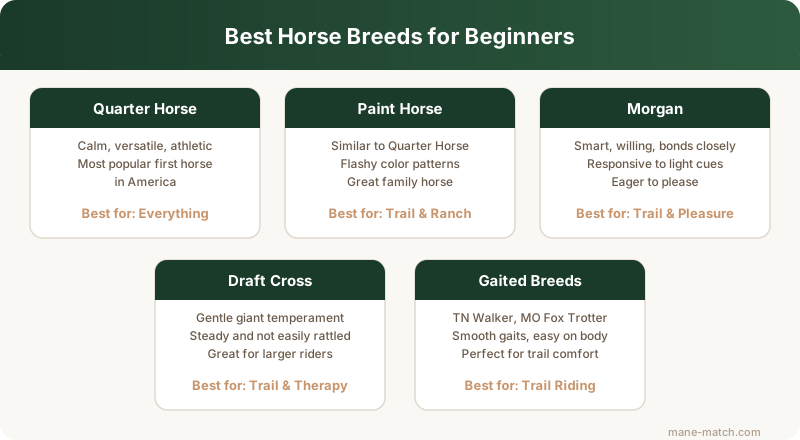
Any breed can produce a great beginner horse, but some breeds are known for temperament that tends to suit first-time riders:
Quarter horses are the go-to recommendation for a reason. They're calm, versatile, and athletic enough to grow with you as your riding improves. A well-broke quarter horse gelding is probably the most popular first horse in America.
Paint horses share a lot of quarter horse genetics and have similar temperaments. They come in flashy color patterns, which is a bonus if a buyer falls in love based on looks, and there's nothing wrong with that, as long as the temperament is there too.
Morgan horses are smart, willing, and bond closely with their riders. A little more forward than a typical quarter horse, but in a good way, responsive to light cues and eager to please.
Draft crosses, such as a Percheron or Clydesdale cross, can be exceptional for beginners. Gentle, steady, and not easily rattled.
Gaited breeds like Tennessee Walkers and Missouri Fox Trotters are worth considering if trail riding is the goal. Their smooth gaits are easier on the body when you're still building your seat.
Quarter horses are one of the most popular breeds for beginners. See quarter horses for sale →
| Cost type | Range (USD) | Frequency |
|---|---|---|
| Initial purchase (beginner-safe) | $1,500 to $7,500 | One-time |
| Pre-purchase exam | $250 to $750 | One-time |
| Boarding (full-care) | $400 to $900 | Monthly |
| Feed and hay (self-care) | $150 to $300 | Monthly |
| Farrier (trim or shoes) | $40 to $200 | Every 6-8 weeks |
| Routine vet (annual) | $300 to $600 | Annual |
| Tack starter set | $1,000 to $3,000 | One-time |
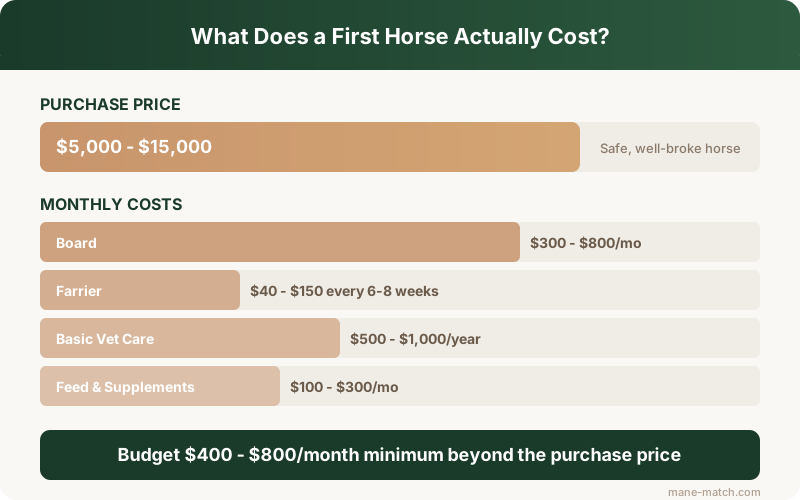
Let's talk real numbers, because the sticker price is just the beginning.
Purchase price. A solid, well-broke beginner horse typically costs between $5,000 and $15,000. Can you find them cheaper? Sometimes. But in the horse world, cheap often comes with a reason. A $1,500 horse that's "great for beginners" is almost always hiding something: soundness issues, training gaps, or behavioral problems. Spend what it takes to get a horse that's safe and honest.
Monthly costs. This is where it adds up. Board runs $300 to $800 per month depending on your area and whether it's pasture board or a full-service facility. Farrier visits every 6 to 8 weeks cost $40 to $150 per trim, more for shoes. Basic vet care, including annual vaccines, coggins test, dental float, and deworming, runs $500 to $1,000 per year. Then there's feed, supplements, tack, and the stuff you didn't plan for.
Budget honestly. Most experienced horse owners will tell you: the horse is the cheapest part. If you can't comfortably afford $400 to $800 a month on top of the purchase price, you're not ready yet. That's not a judgment; it's just the math. Better to wait and do it right than rush in and end up in a tough spot.
Find a horse that fits your budget and experience level.
Find a Horse That Fits Your Budget. Start Browsing →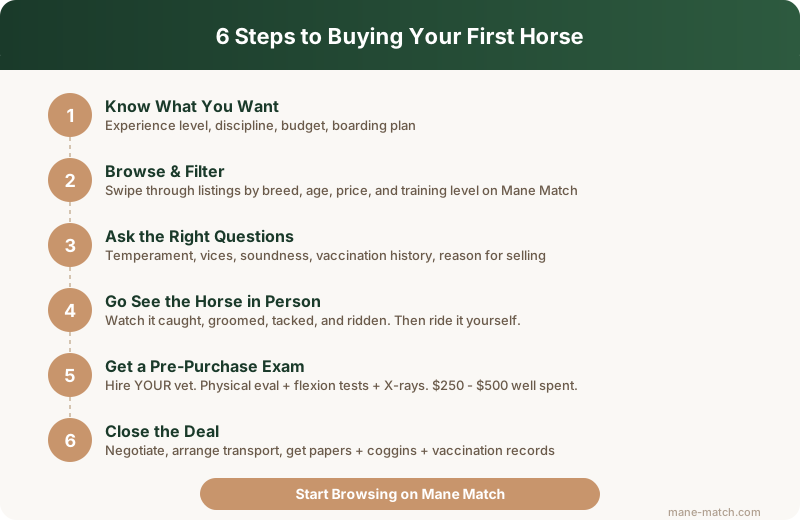
Here's how buying a horse actually works:
Before you start browsing, be honest about your experience level, what you want to do with the horse (trail riding, lessons, showing), how much you can spend monthly, and where you'll keep it. These answers narrow the field fast.
On Mane Match, you can filter beginner horses for sale by breed, age, price, training level, and discipline. Use the swipe interface to browse quickly and save the ones that interest you.
Message the seller directly through the platform. Ask about temperament, vices, soundness, vaccination status, and why they're selling. Good sellers will answer openly. If a seller gets cagey when you ask real questions, move on.
Never buy a horse sight unseen, especially your first one. Watch it be caught, groomed, tacked, and ridden by the seller first. Then ride it yourself if you're able. See how it acts in the cross-ties, how it loads, and how it handles distractions.
Hire your own vet, not the seller's, to do a pre-purchase exam (PPE). This is a physical evaluation of the horse's soundness, including flexion tests and sometimes X-rays. It's usually $250 to $500, and it's the best money you'll spend. It can save you from buying a horse with hidden lameness or health issues.
If everything checks out, negotiate the price, arrange transport, and get the horse to its new home. Make sure you get the registration papers (if applicable), a current coggins, and vaccination records.
Buying too young. A 3-year-old with "so much potential" is a project, not a beginner horse. You want a horse that's already been through its training.
Buying on looks. A pretty horse that bucks is still a horse that bucks. Temperament and training trump color every time.
Skipping the vet check. The $300 you save on a PPE can turn into $3,000 in vet bills. Don't skip it.
Falling for pressure. "I have three other people looking at this horse" is the oldest line in the barn. A good horse will still be there tomorrow.
The right horse is out there. Mane Match makes the search simple: browse beginner horses for sale from real sellers, filter by exactly what you need, and message sellers directly. No clutter, no games. Just horses and the people selling them.
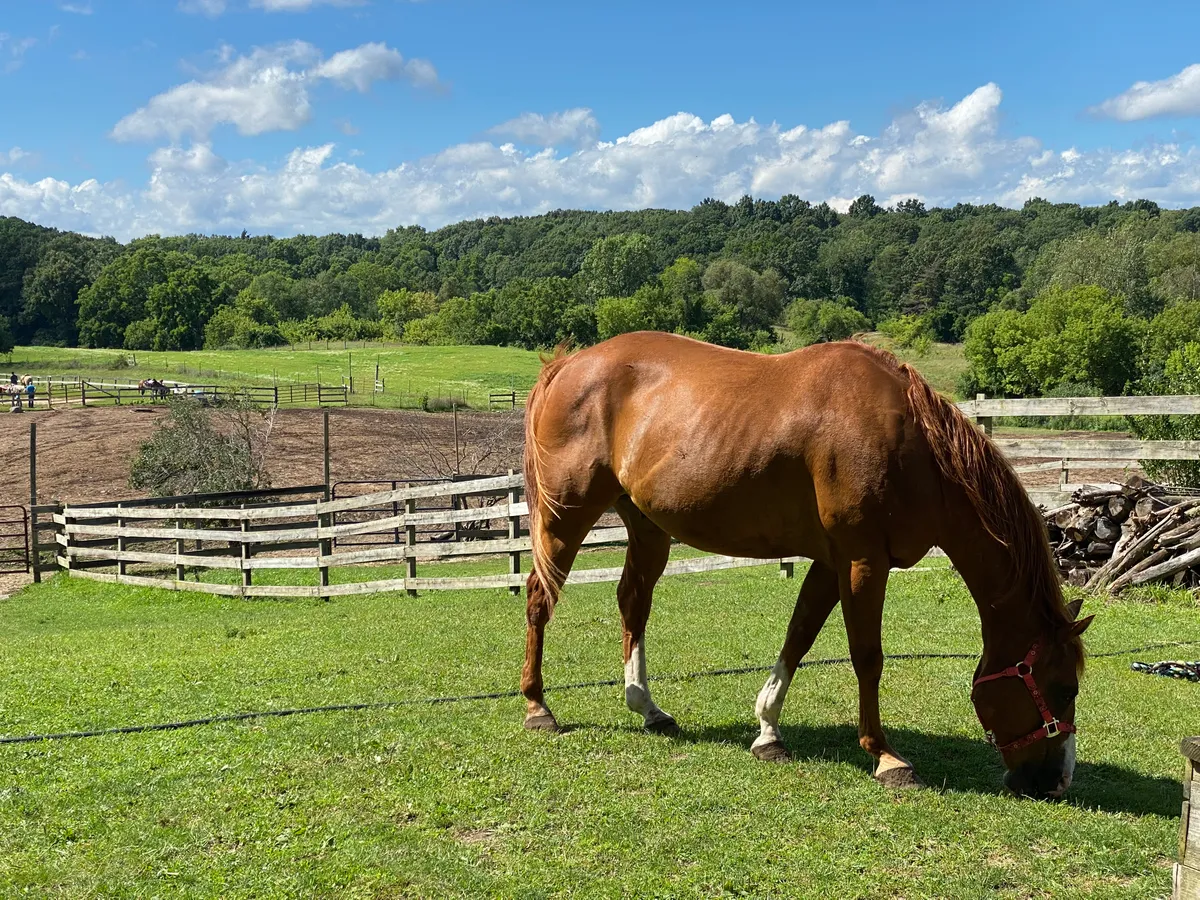
Quarter horses are the most popular first horse in America for good reason: they are calm, versatile, and athletic enough to grow with you as your riding improves. Paint horses, Morgans, and draft crosses also tend to suit new owners. The breed matters less than the individual horse's training and temperament.
A beginner-safe horse usually costs between $1,500 and $7,500 to buy, with most safe, honest first horses landing in the middle of that range. Going much cheaper often means hidden soundness or training problems. Budget for a pre-purchase exam of $250 to $750 on top of the purchase price.
Plan for monthly boarding of roughly $400 to $900 for full care, or $150 to $300 in feed and hay if you keep the horse on your own property. Farrier visits every six to eight weeks run $40 to $200, and routine annual vet care adds $300 to $600. Many owners find the real monthly cost lands well above the purchase price over time.
For most adult beginners, a horse between 14.2 and 16 hands is a comfortable, secure fit. A shorter, lighter-built horse can suit a smaller adult rider. The right size matters because confidence comes from feeling balanced and secure in the saddle.
Often, yes. Horses between 8 and 18 years old usually have the experience and patience a new rider needs, while very young, green horses test even skilled handlers. An older, seasoned horse that is sound and well cared for is one of the safest first-horse choices.
A pre-purchase exam (PPE) is a veterinary evaluation of a horse's soundness and health, typically including a physical exam, flexion tests, and sometimes X-rays. It usually costs $250 to $750. Always hire your own vet rather than the seller's, and treat the PPE as essential for a first horse.
A beginner-safe horse is calm, patient, and forgiving of rider mistakes, and it walks, trots, and canters on cue without a fight. It stands quietly for grooming, picks up its feet, loads on a trailer, and does not bolt, buck, or rear. Ask the seller exactly what the horse has been doing and how often it has been ridden, then watch it handled and ridden in person.
You can browse beginner-friendly horses for sale on Mane Match, filtering by breed, age, price, and training level to match your area and budget. Start with the full horses for sale listings and narrow from there.
Browse listings from real sellers and filter for horses that fit a first-time owner.
See horses for sale that are right for first-time owners →List it free and reach buyers who are actively looking for their first horse.
Selling a Beginner-Safe Horse? List It Free. Those Buyers Are Here →